How to Delegate Effectively: 4 Simple Steps to Get Started

“I know I need some help, but where do I start?”
It’s a question many business owners and independent professionals face when their workload starts to grow. You know there are tasks you could do with some extra support, but deciding what to delegate, how to explain it and who to trust with the work can feel like another job in itself.
The good news is that delegation doesn’t have to be complicated. With a little preparation and clear communication, you can start identifying the tasks that would benefit from additional support and build a working relationship that works for you.
Here are four practical steps to help you get started.
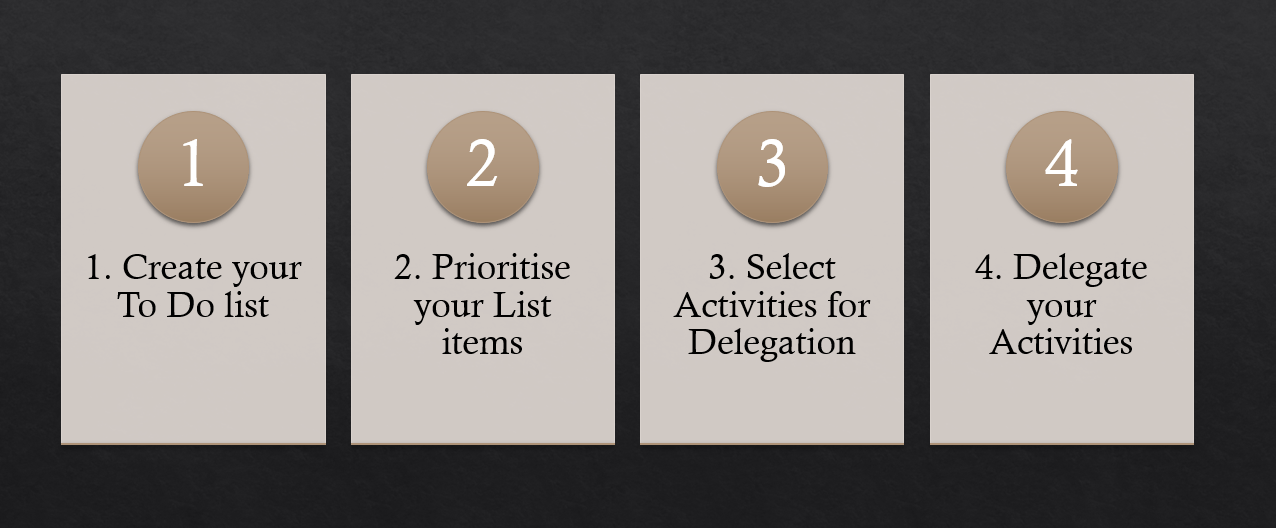
Step 1: Your To-Do list: Create a list of tasks and responsibilities
Start by writing down the tasks you need to complete, including those that regularly get pushed to the bottom of your to-do list.
Think beyond your immediate deadlines. Include the recurring activities that keep your business and client work running, as well as the projects and improvements you never seem to have time to tackle.
For example, your list might include:
- Coordinating a project, assessment programme or series of activities
- Preparing materials, documents or presentations
- Proofreading and formatting reports or other documentation
- Organising associate onboarding and maintaining records
- Updating procedures, templates and business documents
- Researching information or preparing tender responses
- Managing the practical arrangements behind client delivery
- Reviewing and improving recurring business processes
You don’t need to organise the list perfectly at this stage. The aim is to get everything out of your head and onto paper, in a document or in a task management system.
Tip: If your list feels overwhelming, look back at the previous couple of weeks. Which tasks took up your time? Which were delayed? What did you keep meaning to do but never quite got around to?
Step 2: Identify your priorities
Once you have your list, work out what needs attention first.
Consider the deadlines involved, the consequences of a delay and how each task contributes to your client commitments or wider business priorities.
You could group tasks into three categories:
- Urgent:
Tasks with immediate deadlines or important commitments that need attention now.
- Important: Tasks that contribute to your longer-term goals, improve your processes or support future business development.
- Can wait: Tasks that are useful but can reasonably be scheduled for later.
Then consider which tasks are taking up the most time and whether they are preventing you from completing higher-priority work.
A task doesn’t have to be urgent to be worth delegating. In fact, handing over a recurring task before it becomes a problem can be more helpful than waiting until you are already under pressure.
Be realistic about timescales, too. If several tasks are all urgent, decide what genuinely needs to happen first and what can be rescheduled. Additional support can create capacity, but it still needs to be planned and agreed.
Step 3: Decide what to delegate
Now consider which tasks you could hand over to someone else.
Ask yourself:
- Does this task need my particular expertise or decision-making?
- Could someone else complete it with suitable instructions and guidance?
- Do I have the time and skills to do it efficiently myself?
- Is it a recurring task that would benefit from a consistent process?
- Would delegating it free me up to focus on work that needs my attention?
- Does the task involve confidential information, specialist systems or professional responsibilities that need careful consideration?
You may find that some tasks are best kept with you, while others could be handled by a colleague, an associate or an external specialist.
For psychology and coaching professionals, for example, professional judgement and client-facing decisions may need to remain with the relevant practitioner. However, the coordination and administration surrounding that work may be suitable for additional support.
This could include organising assessment materials, coordinating project activities, preparing documentation, supporting associate onboarding or maintaining agreed operational processes.
It is also worth thinking about the tasks you find particularly time-consuming or difficult to fit into your day. They may be important, but that doesn’t necessarily mean you need to do every part of them yourself.
Remember: Delegation isn’t simply about passing on the tasks you dislike. It’s about making considered decisions about how your time, skills and resources are best used.
Step 4: Brief your support provider and agree how you'll work together
Once you have identified a task, the next step is to discuss it with the person you would like to support you.
You don’t need a perfect brief or a fully documented process before making contact. You can start with a conversation about what you need to achieve, what is currently taking up your time and where you would value some help.
Before work begins, aim to agree the following:
The task and desired outcome
Explain what needs to be done and what a successful outcome would look like. If you have an example of a previous document, template or completed task, this can be a helpful starting point.
Priorities and deadlines
Be clear about when the work is needed and whether there are any interim milestones. Discuss competing priorities rather than assuming everything can be completed at once.
Instructions and context
Share the relevant background information, processes and guidance. Explain how the task fits into your wider work so that your support provider understands not only what to do, but why it matters.
Access, information and confidentiality
Agree what information and system access are needed, how information will be shared securely and any relevant confidentiality or data protection requirements. Only provide access to the information and systems needed for the agreed work.
Communication and feedback
Decide how you will keep in touch, ask questions, review progress and provide feedback. Clear communication helps resolve uncertainties early and gives both parties an opportunity to refine the approach.
You don’t have to get every detail right on the first attempt. Some tasks will become easier to delegate as you work together and establish a shared understanding of your expectations.
Equally, delegation does not remove your responsibility for decisions or oversight that properly remain with you. Agreeing who is responsible for what from the outset helps create a more effective working relationship.
Start small and build from there
If you’re new to delegation, you don’t need to hand over a long list of tasks straight away.
Start with one clearly defined activity that would make a meaningful difference to your workload. Agree the outcome, provide the necessary information and review how the arrangement works.
Once you have established a good working process, you can consider whether there are other tasks or recurring responsibilities that would benefit from support.
Over time, you may find that delegation becomes a natural part of how you manage your business, rather than something you only consider when you’re already overwhelmed.
Ready to explore additional support?
If you’re a psychologist, coach or consultancy owner who knows you could use some help but isn’t quite sure where to begin, you don’t need to have everything worked out before getting in touch.
I provide specialist virtual project, operational and business support, helping psychology and coaching professionals manage the practical work behind their projects, client delivery and business operations.
With more than 22 years of experience in psychology and professional development, I understand the sector and can work with you to identify the tasks that would benefit from additional support.
Whether you have a specific piece of work in mind or simply want to explore where an extra pair of hands could help, we can discuss your requirements and agree a suitable way forward.
Get in touch to arrange an initial conversation.
You don’t need a perfect to-do list to get started. Sometimes, the first step is simply talking through what you need help with.